Unlocking Your Engine's True Potential: The Exhaust Upgrade That Makes a Difference
Car enthusiasts understand that factory vehicles rarely deliver everything their engines are capable of producing. Manufacturers must balance performance with cost, emissions regulations, noise restrictions, and appeal to the broadest possible customer base. The result? Your vehicle leaves the factory with compromises built into virtually every system. Among these compromises, the exhaust system represents one of the most significant limitations—and one of the most rewarding upgrades when you're ready to unlock what your engine can really do.
Understanding Exhaust Flow and Engine Performance
Your engine operates by taking in air, mixing it with fuel, igniting that mixture, and expelling the resulting exhaust gases. This cycle repeats thousands of times per minute. The efficiency of this process—how quickly and completely exhaust gases exit—directly impacts how much power your engine produces. When spent gases linger, they occupy space that fresh air-fuel mixture should fill. This restriction limits power output and reduces efficiency.
Factory exhaust systems prioritize cost and compliance over maximum performance. Manufacturers use smaller diameter piping that's cheaper to produce, incorporate restrictive catalytic converters that meet emissions standards conservatively, and design systems that minimize noise for comfortable daily driving. These design choices make perfect sense for stock vehicles sold to general consumers. But for enthusiasts seeking better performance, these same compromises represent opportunity.
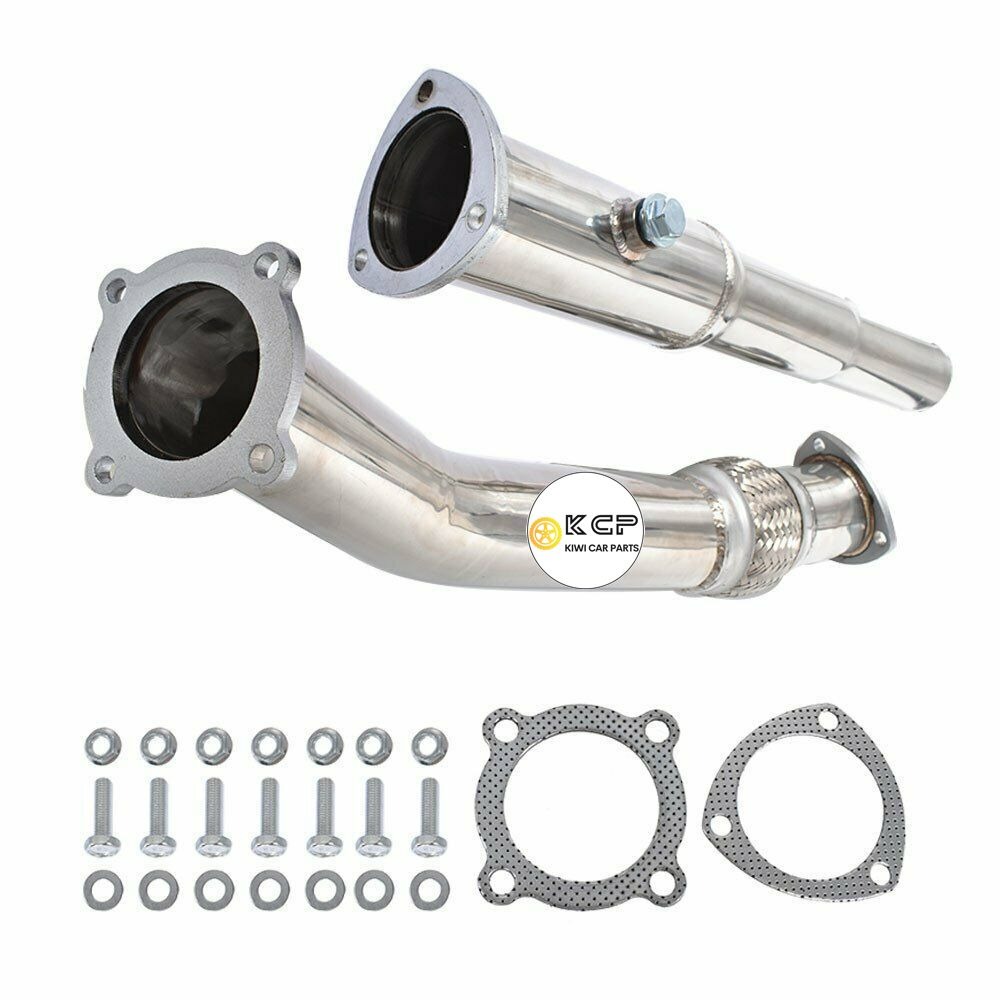
The exhaust path from your engine's turbocharger or headers to the rear bumper contains multiple potential restriction points. Among these, the section immediately after the turbocharger—the downpipe exhaust—creates one of the most significant bottlenecks in turbocharged vehicles. This relatively short section of piping plays an outsized role in overall system performance because it handles the hottest, fastest-moving exhaust gases right as they exit the turbocharger.
What Makes Downpipe Upgrades So Effective
On turbocharged engines, exhaust gases spin the turbocharger's turbine wheel before continuing through the rest of the exhaust system. This turbine drives the compressor that forces additional air into your engine, creating the boost that turbocharged vehicles are famous for. The faster exhaust gases exit after spinning the turbine, the more efficiently the turbo operates and the quicker it builds boost pressure.
Factory downpipes typically use relatively small diameter piping—often 2 to 2.5 inches—with sharp bends and restrictive catalytic converters. These design limitations create significant backpressure that forces the turbocharger to work harder. Higher backpressure means the turbo's turbine wheel encounters more resistance, reducing its efficiency and increasing the time required to build boost.
Aftermarket performance downpipes address these restrictions systematically. Larger diameter piping—typically 3 to 3.5 inches or more—allows greater exhaust volume to flow through. Smoother bends reduce turbulence and flow resistance. High-flow catalytic converters or catless designs (where legal) dramatically reduce restriction while still managing emissions. The combined effect of these improvements substantially reduces backpressure and allows exhaust gases to exit far more efficiently.
The performance gains from quality downpipe upgrades surprise many first-time upgraders. Turbocharged vehicles commonly see 15-30 horsepower increases from downpipe upgrades alone. Torque improvements often match or exceed power gains. These improvements occur throughout the rev range, not just at peak power. You notice stronger acceleration, reduced turbo lag, and more responsive throttle—improvements you feel every time you drive, not just on track days.
Beyond Just Power Numbers
While horsepower and torque gains capture attention, downpipe upgrades provide additional benefits that enhance the overall driving experience. Reduced exhaust restriction means your turbocharger works more efficiently, generating less heat while producing the same boost levels. This improved thermal efficiency helps maintain performance during extended spirited driving rather than experiencing heat-related power loss.
Lower backpressure also reduces stress on your turbocharger itself. When exhaust gases flow freely, the turbine wheel spins with less resistance. This decreased mechanical stress can extend turbocharger lifespan—a meaningful consideration given that turbocharger replacement represents a significant expense. Think of it as asking your turbo to do the same job with less effort, which naturally extends its working life.
Engine efficiency improvements often translate to modest fuel economy gains during normal driving. When your engine breathes more freely, it doesn't work as hard to produce the same power output. This reduced effort can improve fuel consumption, though the actual savings vary based on driving habits. Enthusiasts who exploit the additional power won't see economy improvements, but those who drive conservatively might notice slightly better fuel numbers.
The audible characteristics change noticeably too. Performance downpipes create deeper, more aggressive exhaust notes that many enthusiasts prefer over stock systems' muted tones. The enhanced sound isn't just louder—it's more purposeful and performance-oriented. You hear the turbocharger more clearly, including the distinctive wastegate flutter and turbo spool sounds that enthusiasts appreciate. This acoustic feedback creates more engaging driving experiences beyond just performance metrics.
Installation Considerations and Compatibility
Downpipe replacement requires mechanical competence or professional installation. The parts bolt into place between your turbocharger and the rest of your exhaust system, but access can be challenging depending on your vehicle. Some installations are straightforward and take a few hours. Others require significant disassembly to reach mounting points and can consume most of a day.
Compatibility extends beyond just physical fitment. Many modern vehicles use oxygen sensors in the downpipe to monitor emissions and adjust engine parameters. Aftermarket downpipes must accommodate these sensors correctly. High-flow or catless designs can trigger check engine lights without proper tuning to adjust sensor expectations. This doesn't indicate problems—it just means your engine computer expects different readings than the modified exhaust provides.
For maximum benefit, downpipe upgrades often pair with engine tuning. While you'll notice improvements with just the downpipe, custom tuning optimizes engine parameters to fully exploit the improved flow characteristics. Tuners adjust boost levels, fuel delivery, and timing to extract maximum performance safely. The combination of hardware and software upgrades delivers results that exceed what either modification achieves alone.
Legal Considerations for New Zealand Drivers
Emissions regulations in New Zealand mean you must consider legal requirements when modifying exhaust systems. Removing catalytic converters entirely makes vehicles illegal for road use and prevents them from passing Warrant of Fitness inspections. High-flow catalytic converter downpipes provide performance improvements while maintaining legal compliance—offering the best of both worlds for street-driven vehicles.
Track-only vehicles face fewer restrictions, allowing catless designs that maximize flow. However, these aggressive setups remain illegal for street use regardless of performance benefits. Making informed choices about which downpipe design suits your intended use prevents legal complications and ensures your vehicle remains roadworthy.
Choosing Quality Components
Not all aftermarket downpipes deliver equal quality or performance. Premium manufacturers use mandrel-bent tubing that maintains consistent diameter through curves, high-quality stainless steel that resists corrosion, precision fitment that installs without modification, and proper sensor provisions that accommodate all factory electronics. Budget options might save money initially but can create fitment frustrations, premature rust, or performance that doesn't meet expectations.
We stock quality aftermarket exhaust components for European vehicles, ensuring Kiwi enthusiasts access parts that deliver real performance improvements without the headaches cheap alternatives create. Whether you drive a Golf GTI, Audi S3, BMW 335i, or other turbocharged performance vehicle, quality downpipe upgrades represent some of the most cost-effective power improvements available.
Getting Started With Upgrades
If you're considering downpipe upgrades, start by researching options specific to your vehicle. Enthusiast forums and communities provide real-world feedback about which brands deliver best results for your specific make and model. Verify that chosen parts meet New Zealand compliance requirements if you'll be driving on public roads.
Plan for professional installation unless you have mechanical experience and appropriate tools. While downpipe replacement isn't impossibly complex, it requires working in tight spaces, handling hot components safely, and ensuring proper sealing to prevent exhaust leaks. Professional installation ensures the job gets done correctly, preventing problems that diminish performance or create safety issues.
Your turbocharged vehicle has more potential than factory restrictions allow. Quality downpipe upgrades unlock that potential, delivering noticeable performance improvements every time you press the throttle. Whether you're building a serious performance machine or just want your daily driver to feel quicker and more responsive, exhaust system upgrades deserve consideration as foundational modifications that support everything else you might do to enhance your vehicle.


Comments
Post a Comment